JUDA TRIBAL COUNCIL OF CHIEFS
The Holy Kingdom of Judah is a Hebraic tribal nation with sovereign governance exercised through the Juda Tribal Council of Chiefs (JTCOC), whose authority is derived from the Royal House of Juda. The Council serves as the central governing authority responsible for leadership, government-to-government coordination, initiatives, and institutional continuity.
Authority Structure
The governance of the Holy Kingdom of Judah is ordered through a defined authority structure:
HKJ (Holy Kingdom of Judah) — the tribal nation as the total body and institutional entity
RHOJ (Royal House of Juda) — the source of sovereignty and lineage authority
JTCOC (Juda Tribal Council of Chiefs) — the governing body responsible for leadership, coordination, and execution of governance
EOZ (Elders of Zion) — the faith source of tribal law and the spiritual foundation guiding institutional order
Order of Authority
Authority flows through the structure as follows:
Sovereignty originates from the Royal House of Juda (RHOJ)
Governance is exercised through the 13 Seat Juda Tribal Council of Chiefs (JTCOC)
Institutional function is carried out across the body of the Holy Kingdom of Judah (HKJ)
Tribal law and spiritual order are established through the EOZ (Elders of Zion)
Institutional Function
The Holy Kingdom of Judah operates through a unified system in which sovereignty, governance, law, and execution function together:
The RHOJ establishes sovereign authority
The JTCOC administers governance and directs initiatives
The EOZ provides the spiritual and legal foundation guiding all institutional order
The HKJ functions as the living body through which governance is carried out
Civic Activity and Public Initiatives
Governance is exercised through direct action and community initiatives.
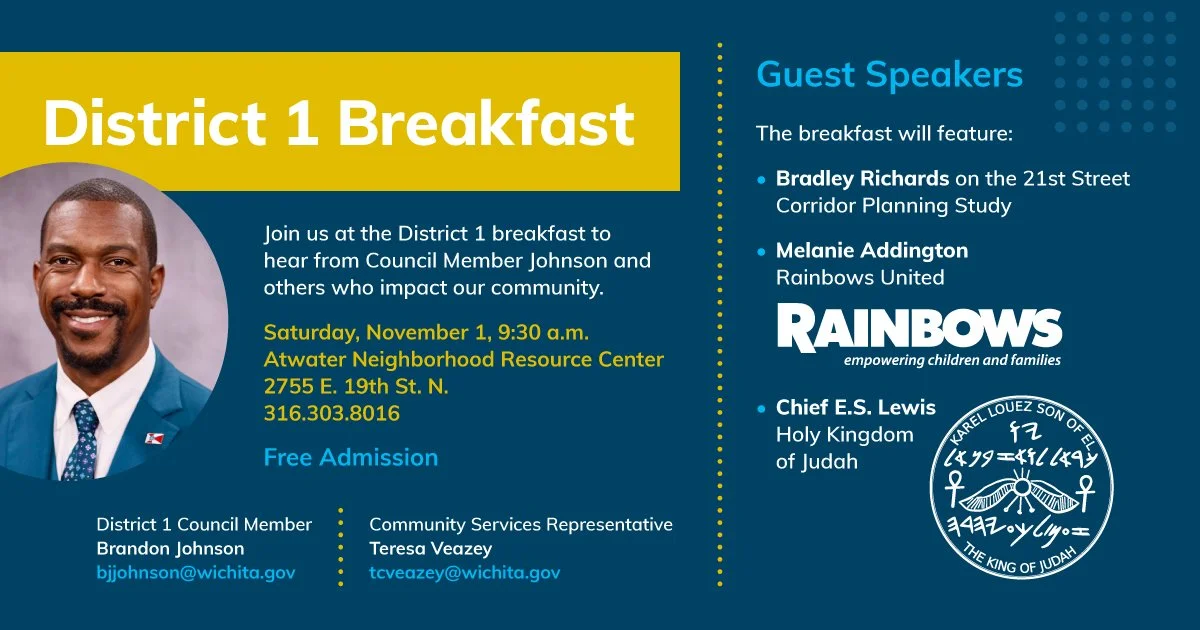
On March 30, 2026, a voluntary firearm buyback program titled “Safe Homes Safe Streets” was conducted in Wichita, Kansas. Firearms were collected for destruction and documented through municipal processes. The event was covered by regional news outlets. These initiatives demonstrate the operational function of governance through public safety, coordination, and community development.
Civic Relations
The Holy Kingdom of Judah operates in active relation to surrounding civic environments through its initiatives and institutional presence. Engagement occurs through:
execution of public initiatives
interaction with municipal processes where required
participation in community-level coordination
These interactions occur as a matter of function and practice and do not define or limit the sovereignty of the Holy Kingdom of Judah.
Chief of Chiefs
The active civically recognized Chief of Chiefs of Juda is Chief of Chiefs C. W. Lewis II. Chiefs C. W. Lewis II is the active, civically recognized leader of The Tribe of Juda. The chronological data of his timeline aligns precisely with the following historical and prophetic records:
Birth: 5 July 1976 (The 5776 frequency of Isiah 19:19 5776 inch tall altar).
Anointing: 30 September 2016 age 40 (The 5776 Hebrew calendar year).
Prophetic Window: 2016 marked the exact 70th Jubilee year since Joshua entered the Promised Land.
Bio: Chiefs C. W. Lewis II: Height 6'1 Age in 2026 50.
Operational Framework
The governance structure, authority chain, and public initiatives function as an integrated system through which sovereignty, responsibility, and continuity are exercised.
Presence in Wichita
The Juda Tribal Council of Chiefs (JTCOC) maintains an active operational presence in Wichita, Kansas, which functions as the operational heart of the Holy Kingdom of Judah due to its central location and favorable civic environment. The Council has established a tribal office within District One and is working toward the development of a Tribal Community Center to support ongoing governance, coordination, and community engagement. Through this presence, the Holy Kingdom of Judah carries out initiatives that reflect its institutional structure and operational continuity.
Self Governance
The Holy Kingdom of Juda is a sovereign Hebraic tribal nation. It is not a federally recognized Native American tribe under the United States government. The Holy Kingdom of Juda is not a distinct entity from the ancient Kingdom of Judah (c. 931–586 B.C.E.), centered in Jerusalem, but represents its modern civic reemergence as a branch of the historically captured kingdom. The Holy Kingdom of Juda(Judah) exercises inherent sovereign authority through the direct administration of public-safety initiatives within Wichita, Kansas. The Safe Homes, Safe Streets tribal gun buyback program includes the authorized tribal destruction of recovered firearms, representing a core governmental function that removes weapons from circulation and reduces violent crime risk. Through the execution of this high-trust public-safety role—including chain-of-custody procedures, secure storage, and lawful disposal—the Holy Kingdom of Judah provides a measurable protective service that contributes to Wichita’s public safety environment. These initiatives demonstrate continuity of governance, institutional structure, and public function, reinforcing the Holy Kingdom of Judah as a self-governing national body operating in practice. The placement of the Holy Kingdom of Judah’s official seal on a governmental document by the City of Wichita constitutes a public administrative act reflecting engagement with the Tribe’s political identity. This inclusion documents interaction at a governmental level and reflects the Tribe’s capacity to operate in civic and administrative matters.
Mission
The mission of the Holy Kingdom of Judah is to re-educate, rehabilitate, protect, and restore its people, while promoting global peace and reintegrating tribespeople into their cultural heritage.
For more information, contact the public relations coordinator at 316.339.6241.